Wednesday, 28 December 2011

Shahid Afridi


Shahid Afridi Biography


Sahibzada Mohammad Shahid Khan Afridi (born 1 March 1980 in Khyber Agency), popularly known as Shahid Afridiis a Pakistani cricketer currently playing for the Pakistani national team. He made his ODI debut on 2 October 1996 against Kenya in Nairobi and his Test debut on 22 October 1998 against Australia at Karachi. He is known for his aggressive batting style, and currently holds the highest career strike rate in the history of international cricket. In a recent survey, Afridi was named as the most popular cricketer in Pakistan. His general style of batting is very aggressive and attack oriented and has earned him the nickname \"Boom Boom Afridi\" for his fastest One Day International century just in 37 balls. As of 22 May 2007, he has an ODI strike rate of 109.38 runs per 100 balls, the highest in the game's history. This attitude has been transferred to Test cricket as well, with Afridi scoring at a relatively high strike rate of 86.13 in Tests. He has an approach to batting that can change the tempo of a game and inspire the mood of an audience, as shown when a mass exodus of spectators occurred in Pakistan in late 2005 following his dismissal from the crease. He hits many sixes long and high, favoring straight down the ground or over midwicket. A trademark shot is a crossbatted flick to the leg-side to a ball outside off stump. This explosive style has led to some memorable shots, most notably the first ever 12 in power cricket in 2002, where Afridi successfully hit the roof. However, his aggressive style increases his risk of getting out and he is one of the most inconsistent batsmen in cricket. This is reflected by the fact that he is the only player to score more than 5000 ODI runs at an average under 25. Bowling-wise, his stock ball is the leg break, but his armory also includes the conventional off break and a 'quicker one' which he can deliver at nearly 80 mph in the style of a medium-pacer. He bowls at a high speed for a spinner, resulting in lesser turn, and relying more on variations in speed. He occasionally sends down a bouncer to a batsmen, which is very rare for a spin bowler.
Shahid Afridi
Shahid Afridi
Shahid Afridi
Shahid Afridi
Shahid Afridi
Shahid Afridi
Shahid Afridi
Shahid Afridi
Shahid Afridi
I M Not Afraid Feat.Pakistan Cricket Team.
Shahid Afridi's RUDE comments on Gautam Gambhir and Indian media

Imran Khan

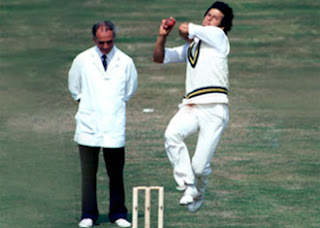
Imran Khan Biography

 He dazzled the world with his amazing talent, he gave cricket another name, he
is and always will be remembered by cricket fans worldwide. Imran khan, an
unbelievably talented all rounder is the Legend of cricket and has reached the
top like no one else.

          This cricketer was born no differently than any other person. He was born in
Lahore, Pakistan into a family of six. He entered the world on November 25,
1952, the only boy and seventh member of his family. His parents gave him the
name Imran Khan Niazi and truly loved him since he is the only boy in their
family.


          Imran was part of a well-educated family. His parents believed that their
children should get the best of education, and become something. Imran's parents
have believed this and followed through with it, and that is why Imran's sisters
are so successful today. His older sister Robina is an alumnus of the LSE and
has a senior position in the United Nations in New York; his other sister Aleema
has a master's degree in business administration and runs a successful business;
Uzma is a highly qualified surgeon is working in a Lahore hospital; while his
other sister Rani is a University graduate who coordinates charity work. When it
was time for Imran to go attend a college, he went to the prestigious public
school in Lahore, the Aitchison College. There he was by far the best player on
his team, being a very fine batsmen. He was still though quite far from becoming
the best in the world. As Imran grew older, his interests went from being a
batsmen to being a fast bowler.

          When sixteen, Imran made his debut for Lahore. Imran's cousins Javed Burki, and
Majid Khan were a great part of cricket therefore when he made his test debut
people thought that he made it because his family was on the Pakistan's Cricket
Team. (Nepotism)

          Later, Imran had to put cricket to the side and focus more on his studies.
Undoubtedly he was back again at the age of eighteen. He played admirably which
resulted in him moving to England as he was chosen to play for a private school
there.

         As the year 1971 approached, he made his test debut while visiting England.
During this tour, he was fined many times by the management because he was
looked upon by his peers as being a very snobby and wild player. Also on this
tour, Imran did not play as well. Because of his "not so good" bowling, Pakistan
was costed to settle for a draw. This was the only test match on the tour.

          When Imran was twenty-one, he was admitted in the Oxford University. For three
years he studied economics and politics. In 1974 Pakistan toured England and
therefore he was selected because of his form for Oxford University and his
experience with speaking English. He had not succeeded to make a big mark
because all three of his tests were drawn.

          In 1976 Imran returned to Pakistan after being away for four years. During the
1976-77 season, Imran got a place in the Pakistan cricket team. He had impressed
the team with his fantastic bowling. Later he moved to play with Sussex. The
biggest reason for Imran to do this was because of his love affairs with the
nightlife of London. He was quite angry at Worcester (a team he played for
before he played for Sussex), because of the racism he found there. During the
time he had been playing for other teams, Imran had become quite a big star.
Everyone was able to see that this guy had talent and played very well. At this
point, not only was he playing well, but had basically become a superstar.

          Imran continued to play for Sussex, because he enjoyed it there. At this point
he had become the "father" of the reverse swing. His most famous partner was
Sarfaraz Nawaz, in which the partners could make a lot of runs.

          Soon after, under the orders of the top official, Imran came back to Pakistan
to play test cricket for the series against India. During this match, Imran hit
two sixes and a four with only seven balls remaining. Because of Imran's huge
success, one could easily say that Imran was one of the most adored cricketer
through the land at this point.

          During the early 80's Imran was not only at his cricketing peak, but had quite
a few relations with women. He had a relationship with Susannah Costantine,
ex-model Marie Helving, and artist Emma Sargeant. Some of his relations ended
simply because of difference in culture and because of the busy and travelling
life of Imran. He brought some of his relationships back home to Pakistan in
which he was frowned upon because he was an individual of Muslim faith.

          When Imran was thirty, he became the captain of the Pakistan cricket team. He
lead them to a victory against England in their second test match.

          During the years of his captaincy, Imran had broken his shin. Even though this
was so, Imran continued to bowl, whether there was pain or not. Because of his
injury, Imran was able to put bowling to the side and concentrate more on his
batting. Imran improved his batting greatly which led him to his first century
in a one day match.

          In 1987, Imran decided to retire from cricket. Javed Miandad took his place.
Because Pakistan's best captain was gone; the team was in somewhat of crisis.
President Zia put a lot of pressure on Imran, therefore he was back as a captain
in 1988.

          In 1992, the world cup final was Imran's exit from cricket. He led Pakistan to a
great victory over India. Pakistan had won the World Cup. It was time for Imran
to retire, which brought a lot of grief to Pakistan. He ended his career with an
outstanding score of 3807 runs and 362 wickets in only test matches. During his
career, Imran had turned the Pakistan cricket stars into the stars they are
today. The day that Imran retired was a very big day. So big that the President
of that time, Zia personally tried to stop him from retiring. Imran said that he
wanted to retire at the highest point of his popularity so that people would be
able to remember him forever.4 He wanted his name to be in all hearts and be
recognized for all his accomplishments. Imran had officially ended his career as
a cricketer and is truly remembered by all.
          When Imran won the world cup, he had raised twenty five million dollars to
build a cancer hospital in memory of his mother. About ten years ago when
Imran's mother had cancer; Imran was desperately looking for some place to take
her, but none of the hospital's in Pakistan had the right facilities to treat
her. When Imran took her to an outside country, it was too late; she had lost
her battle against cancer. Eversnice then, Imran has wanted to build a cancer
hospital. Today he has a wonderful hospital standing in Lahore, Pakistan. It is
named after his mother Shawkat Khanam. Imran does not charge anything to
patients who cannot afford the treatment.

          In 1995, Imran decided to settle down and marry. He married Jemima Goldsmith who
is the daughter of a millionaire. She was Jewish and converted to Islam by
choice just before the two got married. Their wedding took place in Paris. When
they came back to London, they threw a party which was more for the public.

          On November 18th 1996, Imran and Jemima were the proud parent's of a baby boy.
The named him Suleiman Isa. On April 10th, 1999 Jemima gave birth to yet another
baby boy. They have named him Kassim.

          Today, Imran has entered the world of politics and has set up his own party. He
continues to fundraise for his hospital. He does this by taking tours with
popular stars. Some stars donate their money to Imran's hospital. Jemima designs
clothes and sells them overseas. The profit goes to the Shawkat Khanam Memorial
Hospital. Also the restaurant in London, Salt and Pepper gives its profits to
the hospital.

Imran Khan

     Imran Khan

Imran Khan

Imran Khan

Imran Khan

Imran Khan

Imran Khan

Imran Khan

Imran Khan

Imran Khan At His Best     
      
YouTube - Carrier Best Bowling Of Imran Khan.flv Ejaz Riaz
                                

Altaf Hussain

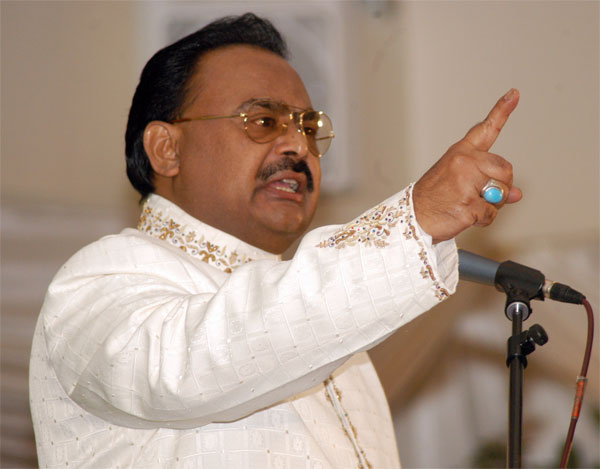
Altaf Hussain Biography
Quaid-e-Tehreek Altaf Hussain Bhai is the fonder and leader of Pakistan's third-largest Political party the Muttahida QaumiMovement better known as MQM. He was born on September 17, 1953 in the city of migrants, the port city of Karachi. Both hisparents, father Nazir Hussain and mother Khurshid Begum belonged to a religious family in Agra, a city known for one of the Wonders of the world 'The Taj Mahal'. His Grand-father Mufti Muhammed Ramzan was a Mufti of the city of Agra and his maternal grandfather Hafi Hafiz Rahim Buksh were also known amongst the prominent Religious families of the city.

After the creation of Pakistan on August 14, 1947, the parents of Quaid e Tehreek Altaf Hussain along with the whole familymigrated to the newly created State of Pakistan and settled down to a lower middle-class locality of Karachi known as Ibn-e-Sina line.Altaf Hussain’s father died on March 13, 1967 while his mother passed away on December 5, 1985.

As with most of he migrants at the time living in Karachi, Altaf Hussain's family too was living on meagre expenses so AltafHussain got his entire Primary and Secondary Education from Government Schools. Later, he went on to study at the IslamiaScience College in Karachi from where he Graguated and onwards at the Karachi University in the Department of Pharmacy wherehe earned his Bachelors Degree in Pharmacy.

Altaf Hussain’s elder brother Nasir Hussain was a government employee so when the government allotted him a quarter at Jahangir Road, they shifted to Jahangir Road quarters. The founder of MQM and his family shifted to house in Block 8 of Azizabad neighbourhood in Federal B Area in Karachi, the same house later became the head office of his Political party MQM, also knownby the house number Nine-Zero (90).

During early 1970s General Yahiya Khan introduce the new scheme of National Cadet Service Scheme for all Inter pass students where all Intermediate pass students would be able to join the Army and give their services to the Nation.Being a Patriotic Pakistan that he is, he immediately applied to play his role to defend his motherland. After clearing allthe tests required for eligibility he was recruited in the Army. His regiment name was 57 Balochistan Regiment and his soldier number was 2642671. In 1971, His regiment was shifted from Hyderabad to Karachi and then sent to the then East Pakistan via ships. Quaid e Tehreek prayed for martyrdom in the line of his duty to protect his motherland. During the interview for final selection of recruits he was asked where his were from, to which he replied they came fromAgra in India. Hearing this the officer conducting the interview disregarded him of being a Pakistani and branded him as a Mohajir(migrant)and an Indian who is unfaithful to Pakistan, Altaf bhai told the officer that he was born here and his parents came to Pakistan for the love of this Nation but to no avail, he was dropped by the selection officer.

As a young Student Altaf Bhai had a strong resentment against the injustice, descrimination and inequality that was faced by the migrants who came to Pakistan during the Indo-Pak partition, also known as 'Mohajirs'. He had immence hatred for the feudal system in the country and the fact that the top 2% of the country's rich and powerful and corrupt elite decided the fate of the remaining 98% of thePopulation. He had a firm belief that until and unless the common man is empowered and free, the institutions free from thecorrupt practices of the powerful elite, the nation would not progress and the common man would not get his fairshare in the country.

He started his Political career when he was still studying Pharmacy at the University ofKarachi where he formed the All Pakistan Mohajir Students Organization (APMSO) on June 11, 1978. Soon APMSO startedgaining popularity among the Urdu-Speaking students and Mohajirs and were able to win 92 seats in college elections in 1980.However, APMSO faced a strong opposition from Islami Jamiat-e-Talaba, student wing of Jamaat-e-Islami, and it was banned in 1981.
He founded the MQM in 1984 to represent Mohajirs, Muslims who emigrated from India in 1947 following Partition, and later campaigned for an end to feudalism and rights for the middle-class and the poor downtrodden masses of the Nation. APMSO was restructured as Mohajir Qaumi Movement on March 18, 1984 and on August 8, 1986.

On 21 December 1991, Quaid e Tehreek was attacked but he escaped injury. A warrant was issued for his arrest in connection with a murder. On 1 January 1992 he left Pakistan for London for medical treatment. During 1992 to 1993 Altaf Hussain's brothers and nephews were extrajudicially murdered. He sought political asylum in the United Kingdom, where he now lives in Mill Hill, North London as a UK citizen. The British government has turned down extradition requests from Pakistan, where more than 100 fake criminal charges were filed against him by Benazir Bhutto's government in the mid-90s.
Altaf Hussain
Altaf Hussain
Altaf Hussain
Altaf Hussain
Altaf Hussain
Altaf Hussain
Altaf Hussain
Altaf Hussain
Altaf Hussain
 QUAID E TEHREEK (APMSO NED UNIT)
                                 
ALTAF HUSSEIN
                                   

Monday, 26 December 2011

Zahid Naqvi

Zahid Naqvi Biography
Zahid,s rise to stardom reads like a bollywood script: from a struggler to a winner. With his hard work, perseverance and sincerity, he has written his own destiny.

Zahid is a mine of unabashed talent and spark, beneath his calm and innocent veneer.Zahid is young and vibrant, with a magnetic charm and easy going candour that sets him apart from the rest. His debut performance as the young and carefree boy-next-door in "Ishk Vishk" was not only applauded but also awarded the Filmfare Best Male Debut. Shahid does justice to his characters each time, be it the sensitive 'Aditya' in "Jab We Met" or the two diametric opposite characters of 'Charlie' and 'Guddu' in "Kaminey" - he stops at nothing short of perfection! Shahid's unique style and the ease with which he can handle a range of characters, from the dramatic to the emotional, leave nothing to be wished for! His ability to switch modes from young and restless, to mature and responsible, bespeaks the confidence of a veteran. In fact, he can boast of having delivered 4 super hits: "Vivah", "Jab We Met", "Kaminey" and "Badmaash Company".

Zahid prowess as an artist does not end here; his talent is multi-dimensional. Not only is he an ace actor and entertainer, but also, his energy and spontaneity as a dancer holds you in a spell.

Zahid is young, yet dependable, with a genuine sincerity about him. He has just the right amount of boyish charisma and dynamism! Being a popular youth-icon and opinion-maker, he holds the baton of marquee brands like Clear Shampoo, Vaseline Men's Skincare range, Pioneer car stereos and Elf Moto.
Zahid Naqvi
Zahid Naqvi
Zahid Naqvi
Zahid Naqvi
Zahid Naqvi
Zahid Naqvi
Zahid Naqvi
Zahid Naqvi
Zahid Naqvi
http://img2.blogblog.com/img/video_object.png
Zahid Naqvi kismat Connection

Shoaib Akhtar

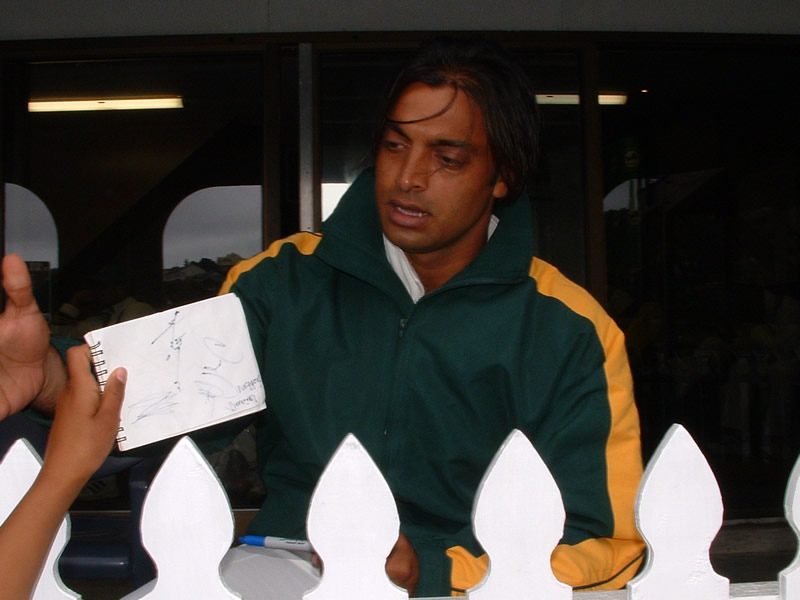
Shoaib Akhtar Biography
He also claimed that Tendulkar and Dravid were not match-winners nor did they know the art of finishing games.

"....Vivian Richards, Ricky Ponting, Brian Lara and the likes of them are great batsmen who dominated with the bat and were truly match-winners. Initially, when I bowled against Sachin, I found these qualities missing. He might have had more runs and records, he lacked the ability to finish the game," he said in the book, to be formally launched on Friday.

Akhtar, who announced his retirement during the World Cup this year, also cited an example where he felt that Sachin was mighty scared to face him.

"We would have faced a humbling defeat in the series but for the fact that we reined in Sachin Tendulkar.

"What went in our favour was that Sachin was suffering from tennis elbow! This severely handicapped the great batsman. We managed to psychologically browbeat him.

"We bounced the ball at him and were able to unnerve him. I returned to the dressing room that first day with the knowledge that Sachin was not comfortable facing fast and rising ball. He was distinctly uncomfortable against me. That was enough to build on", he said.

"I bowled (Sachin) a particularly fast ball which he, to my amazement didn't even touch. He walked away! That was the first time, I saw him walk away from me-- that, too, on the slow track at Faisalabad. It got my hunting instincts up and in the next match I hit him on the head and he couldn't score after that", Akhtar wrote.

The 36-year-old Akhtar, who had scalped 178 wickets in 46 Test and 247 I wickets in 163 ODIs, said that Tendulkar and Dravid who have together conjured over 56,000 international runs (over 33,000 by Tendulkar and over 23,000 by Dravid) are not "match winners".

"I think players like Sachin Tendulkar and Rahul Dravid weren't exactly match winners to start with, nor did they know the art of finishing the game," Shoaib said.

Akhtar who played for Shah Rukh Khan co-owned Kolkata Knight Riders during IPL has accused the Bollywood superstar and former IPL commissioner Lalit Modi of "cheating."

"Shahrukh and I talked about my not being happy with the money settled on me. Shahrukh and Modi got me to agree. I should have never listened to Modi and Shahrukh," he said in the book.
Shoaib Akhtar
Shoaib Akhtar
Shoaib Akhtar
Shoaib Akhtar
Shoaib Akhtar
Shoaib Akhtar
Shoaib Akhtar
Shoaib Akhtar
Shoaib Akhtar
http://www.youtube.com/watch?v=tnf32_wxZnc

Shoaib Akhtar Vs Matthew Hayden